

Video Link Video Content Link
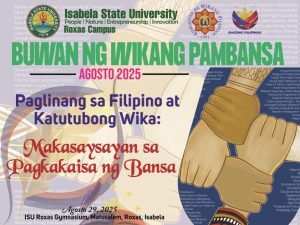
The Isabela State University – Roxas Campus celebrated the annual Buwan ng Wika with tremendous excitement, emphasizing the importance of the Filipino language and indigenous languages in forging national identity and solidarity. The festival, themed “Paglinang sa Filipino at Katutubong Wika: Makasaysayan sa Pagkakaisa ng Bansa,” included a number of activities that included students, faculty, and staff in both educational and cultural experiences.
The celebration kicked off with a flag-raising ceremony, followed by the singing of the Philippine National Anthem and the university hymn. The campus faculty and staff greeted the attendees and emphasized the importance of language as a means of conveying culture, history, and values. The message emphasized that cultivating the Filipino language and local dialects is more than just an academic exercise; it also contributes to national unity and cultural preservation.
The cultural presentations and the search for Binibini at Ginoong Katutubong Wika were a highlight of the festivities. Students performed traditional dances, music, and poetry recitations in Filipino dialects, highlighting the great diversity of the country’s cultural heritage. Faculty members also wore traditional Filipino clothes, adding to the festive and authentic mood.
The event incorporated the Sustainable Development Goals (SDGs), supporting SDG 4 (Quality Education) with activities that fostered learning about Filipino and indigenous languages. It also contributed to SDG 16 (Peace, Justice, and Strong Institutions) by encouraging respect, understanding, and social cohesiveness among participants from many cultural backgrounds. Furthermore, through collaborative performances and community participation, the event addressed SDG 17 (Partnerships for the Goals), underlining the need of collaboration in preserving and celebrating national heritage.
The Buwan ng Wika festival at ISU Roxas successfully demonstrated the diversity of Filipino culture as well as the power of language to bring people together. By mixing educational, artistic, and cultural activities, the institution promoted pride in the Filipino identity and urged students and faculty to continue developing and protecting both national and indigenous languages for future generations.