



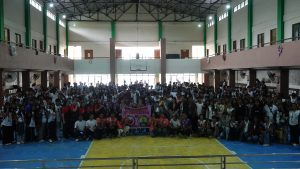
 Despite the unfavorable weather conditions, Isabela State University Roxas Campus successfully conducted its Basic First Aid Training for CWTS and LTS students earlier today, November 22, 2025 at 8:00 AM, held at the ISU Roxas Campus Gymnasium.
The activity was facilitated under the leadership of the ISU Roxas Medical Team, together with the dedicated Junior Medics, who served as instructors and demonstrators throughout the training. Students were taught essential first aid skills such as wound care, proper bandaging, and handling food choking incidents.
One of the highlights of the training was the demonstration of various bandage applications using a triangular bandage, including:
-
Arm Sling – used to support an injured arm.
-
Head Bandage – for scalp or forehead wounds.
-
Hand and Foot Bandage – for securing dressings on extremities.
-
Chest and Back Bandage – for larger areas needing immobilization.
These practical demonstrations helped students understand how a single triangular bandage can be used in multiple emergency situations, making it one of the most versatile first aid tools.
Participants also learned how to respond to food choking, including recognizing signs of choking and applying proper first aid intervention to relieve airway obstruction.
Students actively engaged in every drill and hands-on simulation, showing enthusiasm and readiness to apply the skills in real-life emergency scenarios. The event underscored the importance of first aid training as a key component of community service and student preparedness.
The successful conduct of the activity—despite challenging weather conditions—reflects ISU Roxas Campus’ firm commitment to safety, resilience, and service-oriented learning. The Medical Team and Junior Medics were commended for their dedication in ensuring the training remained safe, organized, and impactful.
The initiative also supports the United Nations Sustainable Development Goals (SDGs), particularly:
-
SDG 3: Good Health and Well-Being – promoting life-saving skills and health awareness.
-
SDG 4: Quality Education – providing practical, competency-based learning experiences.
-
SDG 11: Sustainable Cities and Communities – fostering a culture of preparedness and community resilience.
This training is part of the university’s continuous mission to empower students with essential life-saving skills and contribute to building a safer, more resilient community.